
THE GENDER GAP IN STEM—WHERE WE STAND
The statistics are clear: despite progress, women remain dramatically underrepresented in STEM. Understanding the numbers helps us work toward solutions.
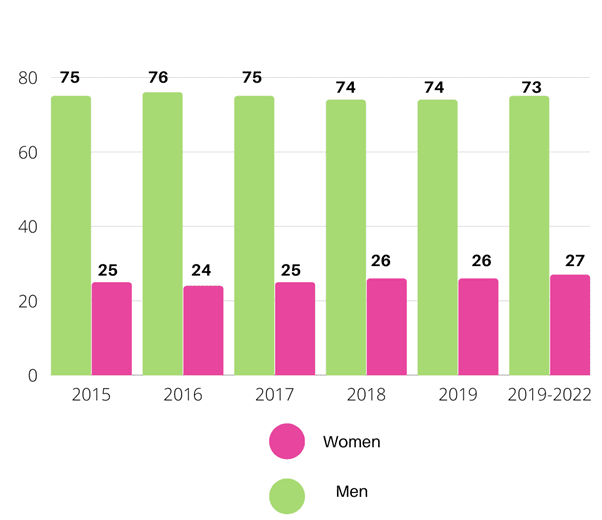
The Current Reality
• Women hold only 28% of STEM jobs in the United States
• In computer science specifically, women make up just 26% of computing professionals
• Only 18% of computer science degrees are earned by women
• Women of color face even steeper barriers, representing less than 10% of STEM workers
• The gender pay gap in STEM is worse than other fields: 13% in science and 10% in engineering
When Girls Lose Interest
Research shows that girls lose interest in STEM between ages 11-15, with confidence dropping significantly during middle school. At age 6, children already perceive girls to be worse at computing and engineering than boys—driven by stereotypes rather than actual performance differences.
Yet girls' math and science performance is equal to or better than boys' at the primary and secondary levels. The problem isn't ability—it's the messages girls receive about who belongs in STEM.
The Workplace Challenge
Even women who pursue STEM degrees face obstacles:
• 72% of women in tech report experiencing "bro culture" at work
• The gender gap widens at senior levels—fewer women in leadership despite equal qualifications
• 45% of women in tech cite poor work-life balance as a reason for leaving
• Women in STEM earn 18% less than their male counterparts in the same roles
But Here's the Good News
Programs like Technovation Girls are changing these statistics:
• 76% of Technovation alumnae pursue STEM degrees (compared to just 21% nationally)
• 60% of alumnae work in STEM careers (double the 29% national average)
• Girls with supportive parents are 3x more likely to pursue STEM careers
Why These Numbers Matter
Every statistic represents a girl who might change the world—if we give her the support and opportunity. When we close the gender gap in STEM, we don't just help girls; we create better solutions for everyone. Diverse teams innovate better, create more inclusive technology, and solve problems more effectively.
What You Can Do
Be part of changing these statistics. Support programs that empower girls in STEM. Encourage your daughter to take advanced math and science classes. Challenge stereotypes when you see them. Every action matters.
Together, we are not just hoping for change—we're creating it.